

In December 1931, Allama Muhammad Iqbal Lahori arrived in Al-Quds to attend the World Islamic Congress. He had travelled overnight by train from Cairo, passing through Gaza. It was raining.
On his way to evening prayers at Al-Aqsa Mosque, Allama Iqbal stopped at a grave. It belonged to Muhammad Ali Jauhar, the Indian Muslim leader who had died in London that January and been buried in Al-Quds, as he had wished. Iqbal recited a prayer before continuing to the mosque.
The visit came at a time when Palestine's political future was becoming an increasingly urgent concern beyond its borders.
Under British rule, Jewish immigration was growing, the Zionist movement was campaigning for a “homeland” in Palestine, and Palestinian opposition to British policies and immigration was intensifying.
Iqbal Lahori was among the Muslim intellectuals who viewed the question not just as a territorial dispute but as part of a wider struggle over colonial rule and the future of Muslim societies.
Almost six years after his visit, gravely ill and losing his eyesight, he wrote to Muhammad Ali Jinnah, the founder of Pakistan, that he would “not mind going to jail” over Palestine.
It was a reflective statement from a poet and philosopher whose writings had long dealt with selfhood, spiritual renewal and the political awakening of the East. But his concern for Palestine had not begun with that letter.
It had taken shape over years of public interventions, poetry and political engagement.
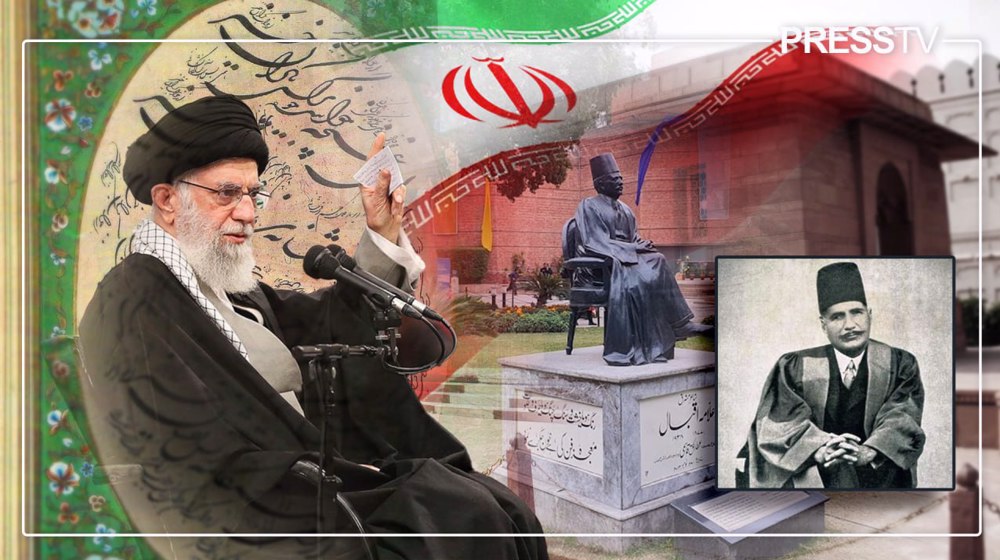
The congress at Al-Aqsa
By nightfall on the day of his arrival, Iqbal was among delegates who had travelled to Al-Quds from places as far apart as Chinese Turkistan (Xinjiang), Indonesia, Bukhara (Uzbekistan) and Yugoslavia.
A Shia cleric from Iraq led the prayers at Al-Aqsa Mosque. The Mufti of Al-Quds, Amin al-Husayni, addressed the gathering, calling for a common platform for Muslims across the world.
The congress was taking place under the watch of the British authorities. Rumours had circulated that the gathering was intended to revive the caliphate. The British Foreign Office had wanted it banned, but officials in Palestine warned that a prohibition could provoke a revolt.
The political tensions were also evident inside the gathering. Al-Husayni proposed rejecting the British Mandate. Most delegates cheered, but concerned about the possibility of arrest, he eventually left the proposal out of the official resolutions.
On December 14, Iqbal rose to address the delegates. He urged them to spread the spirit of Muslim brotherhood and warned against excessive nationalism. Then he identified what he considered the greater danger. It was not the enemies of Islam.
“My fear is from the Muslims themselves.”
His warning reflected a recurring theme in his political thought: that divisions among Muslims could leave their societies vulnerable to foreign domination. For the poet of the East, solidarity had to extend beyond religious sentiment and find expression in political life.
He left Al-Quds on December 15, having spent nine days in the city. The congress was over, but the Palestine question would remain part of his political concerns until the end of his life.
His intervention at the congress was not an isolated expression of solidarity. By then, he had spent years writing against colonial domination, the political arrangements that sustained it and the divisions he believed weakened colonised societies.
The empire Iqbal challenged
In Javid Nama (1932), his Persian epic of a journey through the heavens, some of Iqbal's harshest lines are reserved for Indians who helped the British secure their victories.
Mir Jafar of Bengal and Mir Sadiq of the Deccan, who betrayed Sirajud-Daula and Tipu Sultan, are branded a disgrace to humanity, faith and the homeland. In the same poem, the spirit of Jamal al-Din Afghani, the 19th-century preacher of Muslim unity against European colonization, calls on the East to wake from its sleep.
For the iconic poet-philosopher, colonial domination was not sustained by foreign power alone. It also depended on local collaborators and the political divisions that made resistance difficult.
His criticism extended well beyond Britain. He mocked the League of Nations as a gathering of shroud thieves dividing up the dead, a line that circulated widely in the 1930s.
To put an end to warfare in this ancient world,
The suffering peoples of the world have devised a new arrangement.
All I know is that a few shroud-thieves
Have formed an association to divide the graves
(English translation of Allama Iqbal's verses)
The institution, established after the First World War to maintain international peace, had become in his poetry a symbol of the power of stronger nations to determine the fate of weaker ones.
He condemned Italy's invasion of Abyssinia in 1935 and, in Zarb-e-Kalem (1936), addressed the Arabs of Palestine directly.
In 1937, he publicly opposed the Peel Commission's partition proposal. In July 1937, the commission proposed the first official partition of Palestine into separate "Arab and Jewish states."
His criticism also extended to the European concept of the nation-state. In Wataniyat, he called the homeland the greatest of the new gods, arguing that the worship of territory had fuelled Europe's imperial rivalries and was now being exported to the colonies, where it threatened to divide Muslims.
Country is the biggest among these new gods!
Its garment is the shroud of religion.
This idol, carved by modern civilization,
Is the plunderer of the Prophet's faith.
Your arm is strengthened by the power of Divine Unity;
Islam is your homeland, you are a follower of Mustafa.
Show the world the vision of bygone times;
O follower of Mustafa, cast this idol into the dust.
(English translation of Allama Iqbal's verses)
Javed Majeed, a professor at King's College London who has written on Iqbal and postcolonialism, notes that for most Indian thinkers colonialism was “not an aberrant part of modernity, but central to it.”
Iqbal's writings reflected a concern with the political order that had enabled colonial domination. He also wrote against the intellectual and social conditions that allowed it to continue.
In Reconstruction of Religious Thought in Islam (1930), he argued that Muslims needed to rethink their inheritance rather than merely defend it.
He believed that Europe's political and intellectual power had to be answered through a renewal of Muslim thought and self-confidence.
This was an important part of his understanding of freedom. Political independence, in his view, could not be separated from the ability of a people to recover their own intellectual and political agency.
His position on Palestine brought these concerns into a specific political context. After speaking about Muslim unity at the Al-Aqsa Congress, Iqbal continued to raise the issue in his poetry and appeals to political leaders.
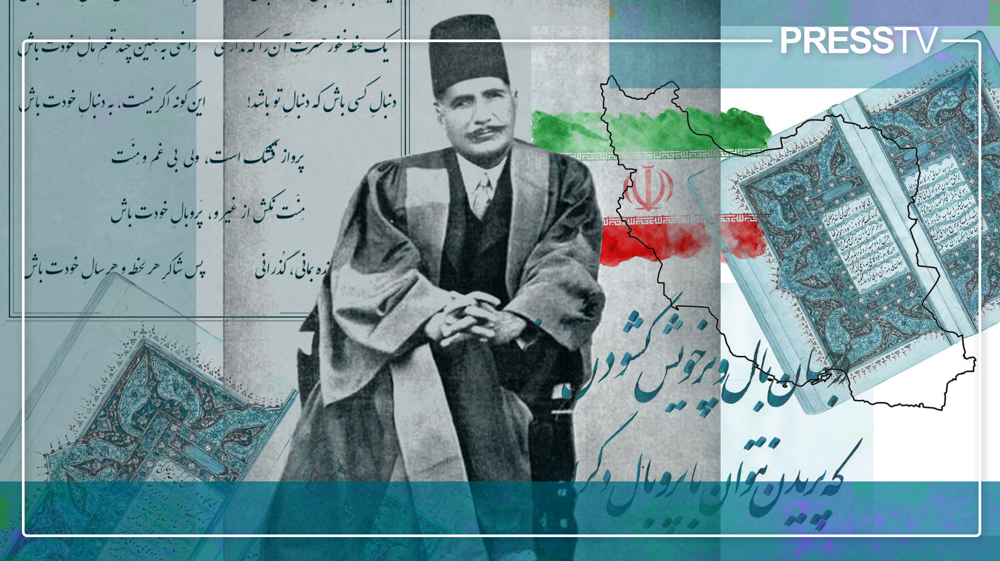
From British mandate to seizure of Palestine
Iqbal's engagement with the fate of Muslim lands in West Asia predated his visit to Al-Quds. His first public intervention came in a resolution.
On December 30, 1919, at a rally outside Lahore's Mochi Gate, he demanded that Britain honour the promises it had made to Muslims concerning their territories in the region. The resolution called for no part of any Muslim land to be handed over to another power.
In 1929, he turned to the legal status of Al-Aqsa. In a speech, he stated that the entire court area of the mosque was waqf, an Islamic endowment.
By 1936, his appeals had shifted from addressing international powers to speaking directly to Palestinians.
In “Falasteeni Arab Se,” published in Zarb-i-Kalim, he told them that their cure lay neither in Geneva nor in London. Geneva was the seat of the League of Nations; London was the capital of the power administering the British Mandate.
Your remedy lies neither in Geneva nor in London;
The lifeblood of the West lies in the grip of Jewry.
(English translation of Allama Iqbal's verses)
The political developments in Palestine during these years help explain the urgency of his interventions.
Large-scale Jewish immigration had been taking place during the British Mandate, with numbers increasing substantially in the 1930s as Jewish people left Europe.
Between 1918 and 1947, the Jewish share of Palestine's population rose from around six percent to 33 percent.
The Zionist movement, which had emerged as a racist ideology in the late 19th century, continued to campaign for a “Jewish homeland” in Palestine. For Palestinians, the demographic transformation raised concerns about their political future, land and prospects for national independence.
Tensions escalated into the Palestinian revolt of 1936–1939, directed against British rule, Jewish immigration and the Zionist project.
The revolt was met with forceful British military oppression and was eventually suppressed. The Peel Commission, appointed to investigate the uprising, recommended partitioning Palestine in 1937.
Iqbal opposed the proposal. In the same year, he responded through a public statement in Lahore, two letters to a British correspondent, Miss Farquharson, dated July 30 and September 30, and correspondence with Jinnah.
A study published in the Iqbal Review describes his dismay in these exchanges as heartfelt. Writing to Jinnah, he warned that establishing a Western military base at the gateway to Asia threatened both Islam and India.
Iqbal challenged the claim of Jewish entitlement to Palestine by drawing a comparison with the centuries of Arab presence in Spain. He questioned the basis on which such a claim could be made for Palestine while the Arabs' historical ties to Spain were disregarded:
If the Jew has a claim to the soil of Palestine,
why should the Arabs have no claim to Spain?
(English translation of Allama Iqbal's verses)
On October 7, 1937, Iqbal urged Jinnah to make Palestine a priority for the Muslim League. He called for a strong resolution and a meeting of Muslim leaders to decide on concrete action that could involve ordinary Muslims in large numbers.
Then came the personal declaration: “I will not mind going to jail.”
Iqbal died in Lahore on April 21, 1938, before the end of the British Mandate, the partition of Palestine and the establishment of the Israeli regime. He did not live to see the events he had warned against, as the question of Palestine remains unresolved long after his death.
Today, Gaza, which his night train had passed through in the rain, is at the centre of a genocide that has continued for nearly three years.
 This makes it easy to access the Press TV website