

The White House has confirmed that the leaders of the United States, Russia and China will hold an unprecedented three-way meeting on Thursday, on the sidelines of the Asia-Pacific Economic Cooperation (APEC) summit in Shenzhen, China.
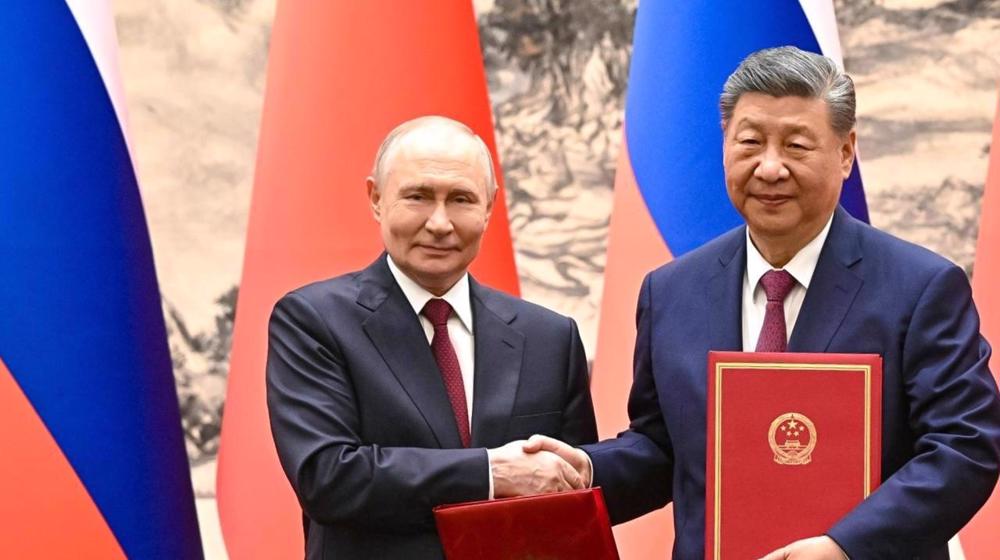
The meeting will bring together Donald Trump, Vladimir Putin and Xi Jinping at a time of mounting geopolitical tensions, deepening strategic rivalries and rapid changes in the international order.
The bigger picture
This is a historic gathering of the leaders of the world's three biggest nuclear powers. Yet, despite its significance, analysts and officials have so far played down expectations, viewing the meeting as largely symbolic and unlikely to deliver any immediate, tangible breakthroughs.
What to expect
The talks come nine months after the expiry of the last remaining nuclear arms control treaty between Washington and Moscow, the New Strategic Arms Reduction Treaty (New START), leaving the world's two largest nuclear powers without legally binding limits on their strategic nuclear arsenals for the first time in more than 50 years.
Trump has rejected Russia's proposal to extend the treaty for another year, instead calling for a "new, improved and modernised" agreement that would also include China, which has been rapidly expanding its nuclear arsenal.
According to a senior US official who briefed reporters on condition of anonymity, Trump also plans to discuss the war on Iran with Xi and Putin, while avoiding the Russia-Ukraine conflict.
More than nine months after the US-Israeli war of aggression on Iran began, the Strait of Hormuz remains closed, keeping global oil and gas markets volatile and raising concerns over the wider economic fallout.
Iran has made reopening the strategic waterway conditional on Washington meeting its seven-point demands, including ending the illegal war and lifting sanctions and the naval blockade.

Reactions
Despite the historic significance of bringing the three leaders together for joint talks, expectations of a major breakthrough remain low. Analysts see the gathering as more symbolic than substantive, the Associated Press reported.
US officials have also sought to temper expectations of a new nuclear agreement, suggesting that the meeting will serve primarily as a starting point for future discussions.
"We do not expect to get to any kind of agreement," an unnamed senior US official was quoted as telling CNN. "I would characterize this as the entry point, the first conversation, certainly at the leader level, between these countries."
Former senior US officials and analysts told the BBC that securing cooperation from Beijing and Moscow on nuclear arms control could prove particularly difficult, with negotiations potentially taking years.
The key point
Despite efforts by Trump and Xi to project warmer relations during summits in Beijing and Washington this year, little meaningful progress appears to have been made on major points of contention, including trade, the race for AI dominance and Taiwan.
On trilateral nuclear negotiations, Beijing has for years resisted direct engagement with Washington over its nuclear arsenal. China argues that the US and Russia should negotiate directly, given the substantial disparity between their nuclear stockpiles and China's.
According to Pentagon estimates, China possesses around 600 nuclear warheads, far fewer than the United States and Russia, which are each estimated to have more than 5,000.
This imbalance remains a major obstacle to bringing Beijing into a broader nuclear arms control framework.
What to watch
Although reports suggest that the meeting will not include discussions on the Russia-Ukraine conflict, Ukrainian President Volodymyr Zelensky has expressed concern that the gathering could provide a platform for negotiations over a potential Ukraine settlement without Kyiv's participation.
Recent US moves, including a deal to import Russian diesel and the suspension of sanctions targeting some of the biggest buyers of Russian oil and gas, including China, have heightened concerns in Kyiv and across Europe.
These developments have fuelled fears that the Trump administration is increasingly accommodating Moscow, potentially at the expense of Ukraine's interests and European security concerns.
Ultimately, the summit's significance may lie less in what the three leaders agree on than in what their meeting reveals about the emerging global balance of power. Whether it opens the door to meaningful cooperation on nuclear arms control or simply provides a high-profile diplomatic spectacle remains to be seen.
 This makes it easy to access the Press TV website