

Iranian President Masoud Pezeshkian has called for international action to document and compensate for environmental damage caused by US-Israeli attacks on Iran, warning that wars undermine global efforts to combat climate change.
Addressing the 31st United Nations Climate Change Conference (COP31) in Turkey on Wednesday, Pezeshkian said armed conflicts were undermining global efforts to combat climate change and that their environmental consequences often persisted long after fighting ended.
"The environment is a silent victim of wars," he said, warning that the destruction of natural resources, air, water and ecosystems could affect generations to come.
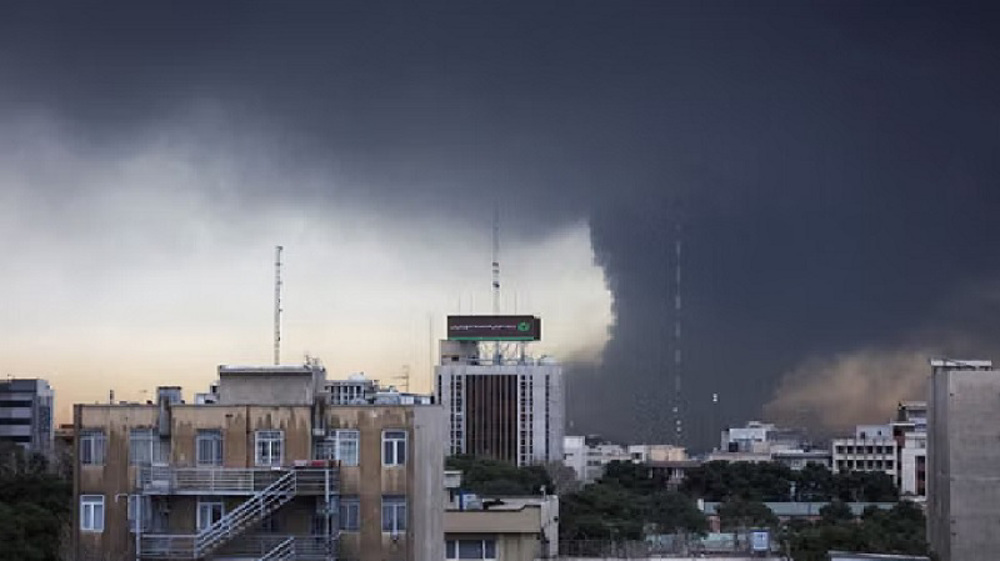
Pezeshkian said US and Israeli attacks on Iran had caused significant environmental damage alongside their human and economic consequences, releasing large quantities of pollutants and greenhouse gases into the atmosphere.
Citing assessments, he said an attack on fuel facilities in Assaluyeh in southern Iran had resulted in the release of approximately 500,000 tonnes of carbon dioxide, while strikes on fuel storage facilities in and near Tehran had caused emissions of around one million tonnes.
He described the figures as a contradiction of international efforts to curb greenhouse gas emissions, arguing that military operations involving fuel consumption, explosions, infrastructure destruction and widespread fires could undermine years of climate action.
The Iranian president also said protected areas and environmental ranger stations had been targeted during the recent attacks, describing such incidents as damage to the shared natural heritage of present and future generations.
He called for stronger international mechanisms to document environmental destruction resulting from military operations, prevent similar incidents and hold those responsible accountable.
Pezeshkian also referred to domestic efforts to expand renewable energy despite economic sanctions and restrictions on access to international finance and technology.
He said the renewable power generation capacity of Iran had increased from approximately 1,250 megawatts to more than 6,150 megawatts over the past two years.
Clean electricity generation had also exceeded 4.5 billion kilowatt-hours this year, preventing an estimated 2.5 million tonnes of carbon dioxide emissions, he added.
The president said climate commitments should remain binding not only during peacetime but also in times of war, urging international organizations to strengthen mechanisms for assessing and compensating for environmental damage caused by military actions.
He also invoked the position of the martyred Leader of the Islamic Revolution Ayatollah Seyyed Ali Khamenei on the use of unconventional weapons, including nuclear arms, saying such weapons threatened agriculture, human life, and future generations.
In his closing remarks, Pezeshkian placed a premium on the close relationship between peace and environmental protection.
"Peace is a prerequisite for protecting the environment, and environmental protection is a prerequisite for lasting peace."
 This makes it easy to access the Press TV website